Canyon Lake
Saturday, March 14, 2026

Event Notes


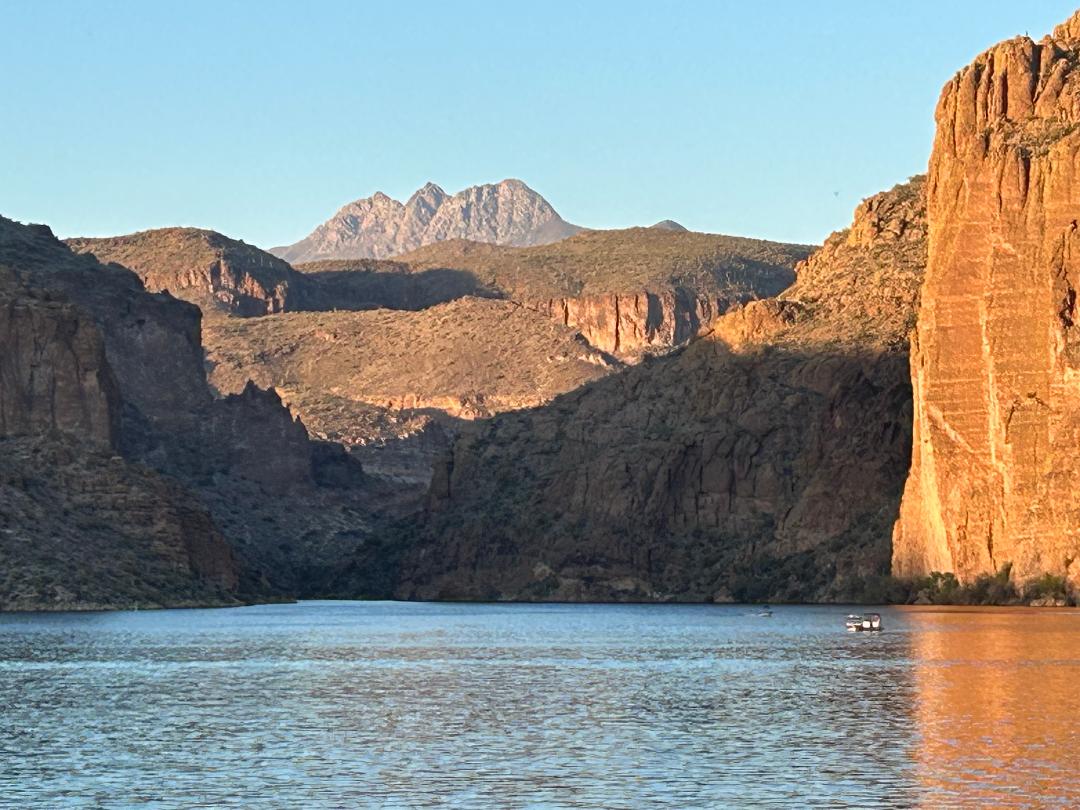
Thanks to everyone who signed up for our 2026 Phoenix Outback Navigation Games at Canyon Lake. We're excited that you've decided to join us for a day of navigation fun at another scenic Arizona location. The rugged terrain surounding Canyon Lake is some of the most beautiful scenery in Arizona. The proximity to the Phoenix metro area makes it the event easily accessible. Make sure to bring your camera. You're in for a real treat. We hope you enjoy your visit.

Below are notes for events. Please read the notes carefully as they include important information about the race. Let us know if you have any questions.

The following sections are included below:
1. EVENT LOCATION
2. MISCELLANEOUS
3. SCHEDULE
4. CHECK-IN
5. MAPS, COURSE STATISTICS
6. SCORING
7. GEAR LIST


1. EVENT LOCATION

The start/finish for all events is at the Acacia Recreation Site on the south side of Canyon Lake, in the center parking lot, next to the fee payment machine. Early in the morning, the parking area isn't very busy compared to the rest of the recreation area. The area gets busier as the temperature gets warmer later in the day. Please note: A Tonto Pass is required to park anywhere on the Canyon Lake shoreline. There is a kiosk onsite where you can purchase a pass. However, prices at the kiosk are 50% higher than the price if you purchase before you arrive. See the Tonto website https://www.fs.usda.gov/r03/tonto/passes for more information. America the Beautiful passes (Annual Pass, Senior Pass, etc.) are also valid for parking.
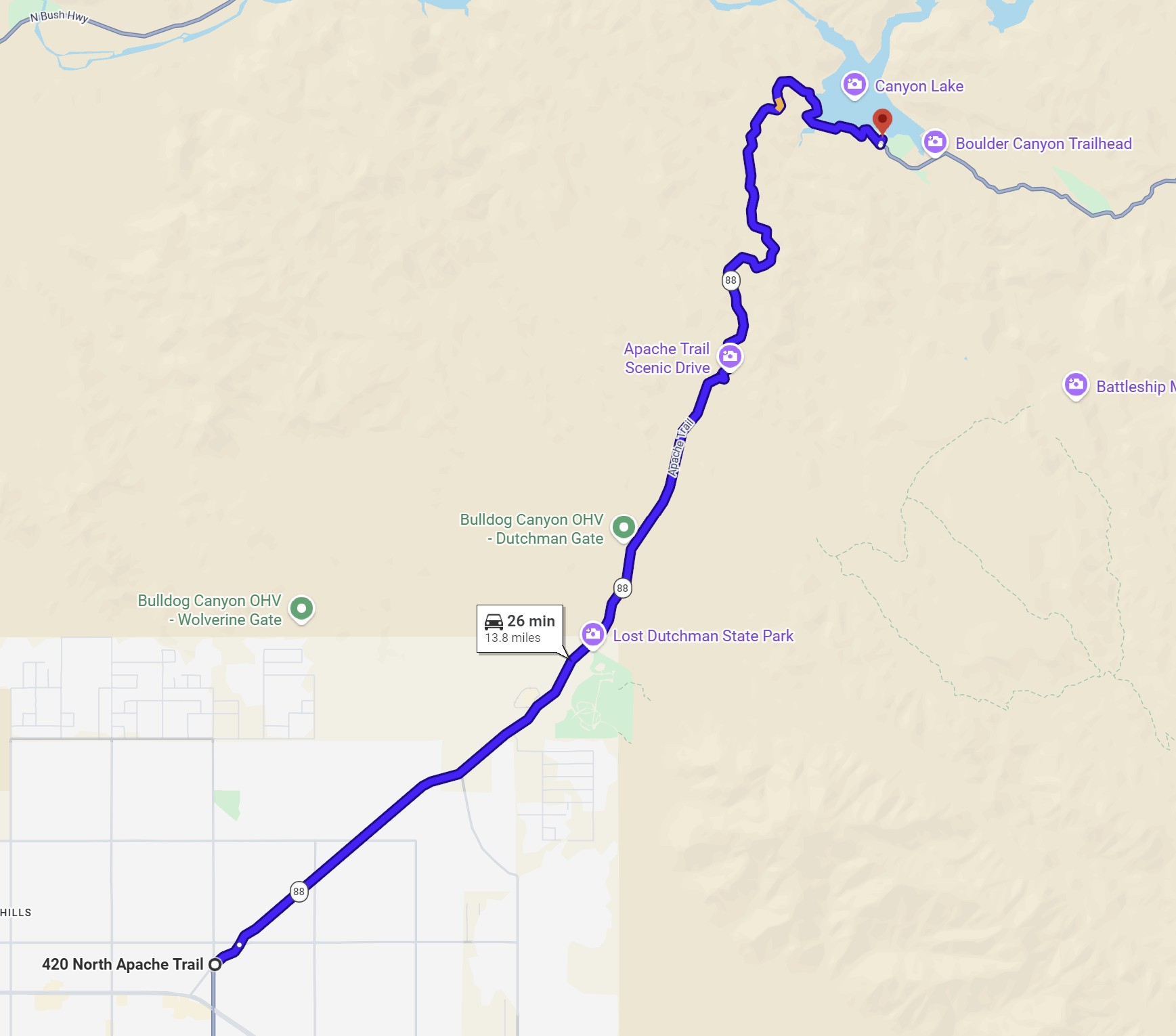
Google Placemark: https://www.google.com/maps/place/33.536800, -111.431867
Directions to Canyon Lake, Acacia Recreation Site: http://gphxo.org/Locations/CanyonLake_Directions.htm


2. MISCELLANEOUS

  • Weather - Heat Wave Average highs at Canyon Lake in mid-March are in the upper 70's F. The lows can drop into the mid-50s F. Unfortunately, it looks like we're in for a heatwave this weekend. We can expect temperatures nearing 100F. We have two water drops on the course and one manned control. There are also stores along AZ88 where you can purchase food/drinks if you're in a bind. Please plan accordingly. You'll want to bring 2-3 liters of your own water.
  • Tonto Pass A Tonto Pass is required to park anywhere on the Canyon Lake shoreline. There is a kiosk onsite where you can purchase a pass. However, prices at the kiosk are 50% higher than the price if you purchase before you arrive. See the Tonto website https://www.fs.usda.gov/r03/tonto/passes for more information. America the Beautiful passes (Annual Pass, Senior Pass, etc.) are also valid for parking.
  • Snakes Things are heating up, so you could run into a snake. FYI, we've walked the desert setting for 100's of events over the years. We've about stepped on 6 snakes total over 20 years.
  • Itchy Vegetation We haven't encountered poison ivy in the area, but scorpion weed may be present near the lake and in the hills overlooking the lake. We came away from last weekend's scouting with itchiness on our legs that could last for weeks. We suggest you cover your legs to guard against contact with noxious plants.
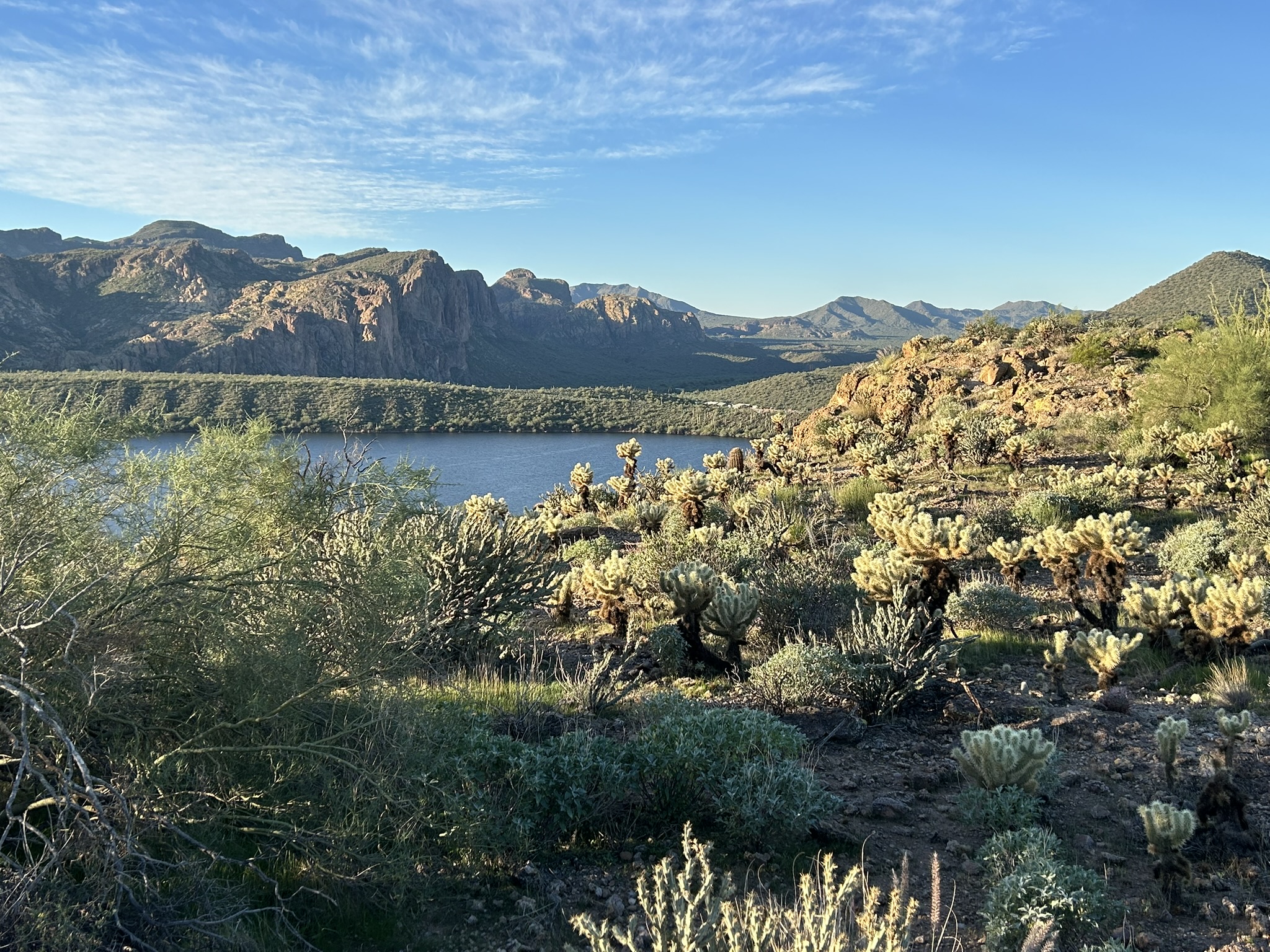
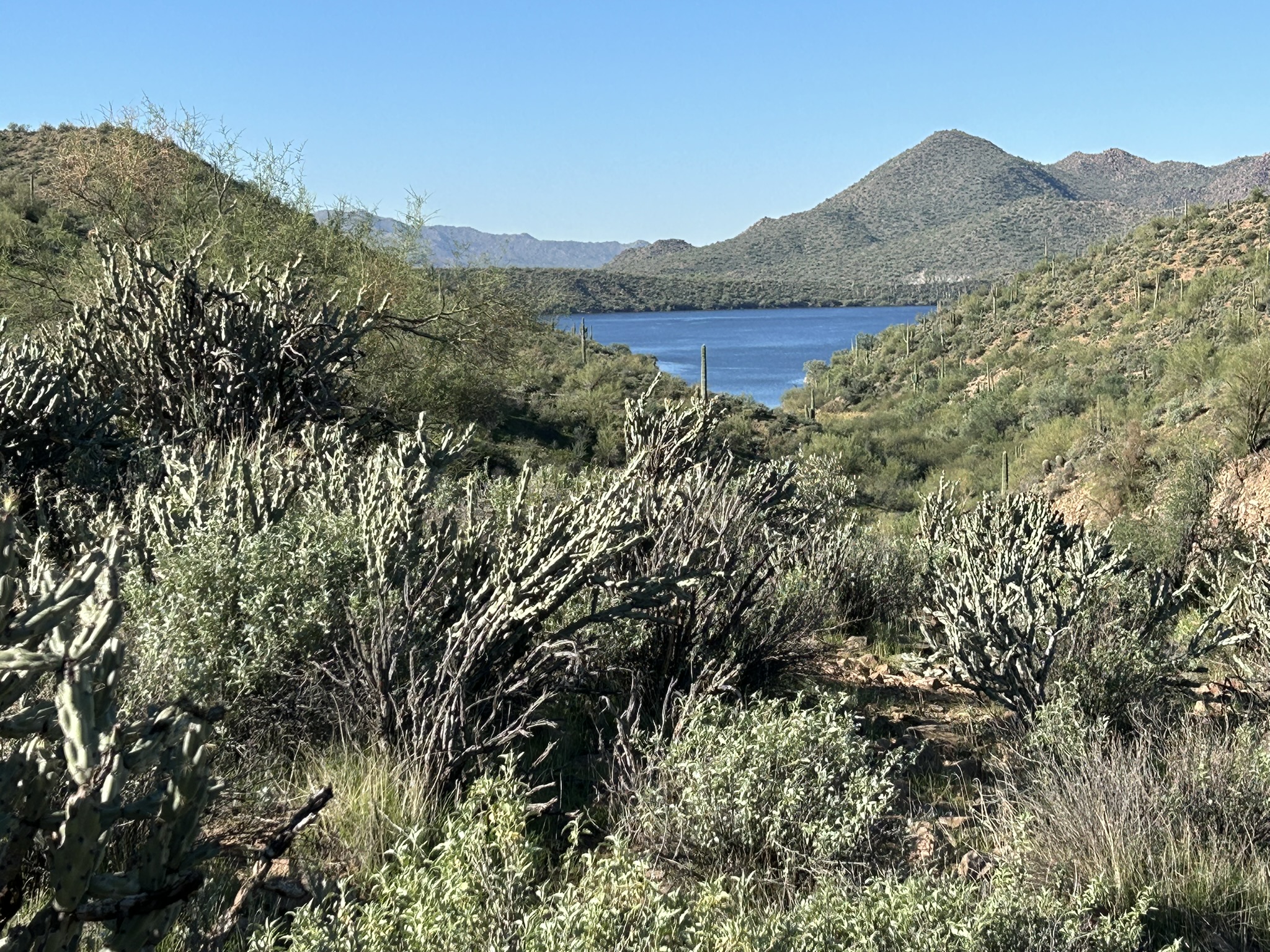
  • Thorny Vegetation The vegetation surrounding Canyon Lake is thick in places. While some of the terrain is runnable, other parts are choked with thorny trees and bushes. Vegetation is more abundant in the washes and along the lake shore, and cholla gardens abound at the heights overlooking the lake. We suggest bringing a small comb to extract any cholla balls that may attach themselves to your clothing or skin. If you pay attention, you should be able to avoid contact with sharp objects. If you do end up with an injury caused by a thorny plant, we'll assume you did it on purpose to get us to feel sorry for you.

    Pictures of Cholla

  • 50 Meter Limit Teammates in all events must stay within 50 meters of each other at all times.
  • Visit Controls Together Teammates in all events must visit controls together. You are not allowed to send one teammate to visit a control while other members of the team take a nice break.
  • Target Shooting We didn't encounter any shooters when we set the course. But it's Arizona, so anything is possible.
  • OHVs (Off-Highway Vehicles) The area is quite popular with the OHV crowd. You may find yourself on OHV roads, but we're generally quite symbiotic with their use of the area. If you're on an OHV road and you hear a loud engine, we suggest you step off the road and wait for the vehicle to pass.
  • Dispersed Camping There are many dispersed campers in the area (none on the shoreline). Avoid the campsites and give the campers their space.
  • Controls on Trees and Bushes We hung many of the markers on shrubs and trees in the area. Depending on the angle of approach, the markers may or may not be visible in the mapped location. If you're sure you're in the correct location marked on the map, you may need to look on the opposite side of the vegetation.
  • Steep Terrain, Loose Rock Just to warn you, there are areas on the course that are quite steep and covered with loose rock. Some of the checkpoints are in the high cliffs surrounding the lake. Rather than attacking a steep slope and risking sliding back down, we suggest you travel around the steep areas and stay in drainages that are less steep.
  • Game Trails We followed a number of game trails when we set the course. The trails were handy, but aren't visible from satellite views. The maps do not include game trails.
  • Unmapped Features The area covered by the event is large. Given the amount of time spent on the course, it wasn't feasible to create an orienteering-quality map of the area. There are many unmapped rocks and cliffs, and some roads and trails may not appear on the map. The contours are based on a lidar point cloud. The 2.5m/5m/10m contours are quite accurate. We tried to place controls in features easily identified by the contours.
  • Manual Punching We are not using electronic timing. We have manual punching for all our destination markers. We'll give you a control card at the start of the event. You'll register your visit to each destination by punching the appropriate spot on the control card.
  • Cell Phones We encourage you to travel with a cell phone. There is minimal cell phone coverage throughout low areas of the course. Coverage is better at the heights surrounding the lake. We had almost no luck with T-Mobile. Verizon worked well for some. You may take pictures with your phone or use your phone for emergency communication. You are not allowed to use your phone for navigation. Use of navigation features on your phone will result in disqualification.
  • GPS Trackers You may use a GPS tracker (standalone GPS device, GPS watch, etc.) to record your route during the event. You may not use any type of GPS for navigation or measuring distance. Manual bike odometers that measure distance based on wheel circumference are allowed. Barometric altimiters are allowed. Bike odometers that measure distance using GPS are not allowed. Navigation or measuring distance with a GPS unit will result in disqualification.
  • Disappearing Control Bags We placed many of the destination markers in the field last week. We can't guarantee that the orange and white bags remain where we left them. If you get to a place where you think the bag is missing, look for a piece of orange tape nearby. We placed the tape in trees/bushes near the bags and wrote a three-letter word on the tape. Record the three letter word on your control card if the bag has disappeared.
  • Aid Stations We'll two manned aid stations on the courses. The manned stations are accessible for all courses. We'll also have several control locations with water available. It shouldn't be too hot during the events. Feel free to take advantage of the aid station and the water we've provided.
  • Restrooms, Showers There are no showers, but the recreation area has a number of pit toilets. There are more amenities in and around the marina, but that's a bit of a hike from the start/finish/transition. Outside the recreation area, you're on your own. You'll have a lot of nature's finest desert terrain to do whatever it is you need to do.
  • Early Race Termination If you need to leave the event early for any reason, please sign out with race directors at the start/finish. It would be really bad if we called out emergency services and spent time looking for you only to find out you decided to go home two hours earlier.
  • Arizona Trail The main highway through the area is the Apache Trail (AZ88). The highway is very busy during the day. You may travel along the road, but please be careful.
  • Adventure Racers

  • No mandatory mode of transportation (Adventure Races Only) For the adventure races, there is no mandatory mode of transportation. No electric bikes are allowed, and the watercraft must be inflatable. You are welcome to travel by foot, bike, or watercraft to any of the controls. It's your choice.

    We guarantee it will be more efficient to visit most of the controls on foot. For 6 or 7 checkpoints at the northeast end of the map, getting there by bike is quicker. For the checkpoints on the banks of the lake, it's possible to reach some of them on foot. Others are located at the base of tall cliffs and could be difficult if not impossible to reach on foot. Again, you get to plan your own adventure, so hike, bike, or paddle, you're welcome to use your favorite mode of transportation.

  • Bikes

  • Bike on Roads and Trails Only When traveling by bicycle, you must remain on obvious paved roads, improved gravel roads, jeep trails, single-track trails, or open drainages at all times. You are allowed to ride your bike through the sandy washes. You are not allowed to ride cross-country between points. The desert is fragile, and riding cross country will leave a trace that could take decades to disappear.
  • Paved Roads. Please limit your riding along the Bush Highway. The highway gets very busy during the day. We didn't place controls on the west side of the highway, so there are few situations where you'll need to bike along the highway.
  • Helmets Required (Bike travel only) Helmets are required while you travel on your bike. Travel by bike without a helmet will result in disqualification.
  • Sand The bikeable portions of the course are easily 50% in sandy washes. We designed most of the course so you can avoid the sand. We suggest you take this into consideration when choosing the type of tires you use. If your tires are too narrow, you'll spend a substantial amount of time walking your bike.
  • Bike Lock The bike controls are all within 200 meters of a road or trail. There will be cases where you need to drop your bike and hike for a short distance to reach the control. While we didn't encounter many others when we set the course, you should lock your bike if you're concerned about theft when you hike to the controls.
  • Watercraft

  • Not Mandatory You are not required to travel by watercraft during the race. However, several controls on the banks of the lake are nearly inaccessible on foot.
  • Inflatable Only Only inflatable watercraft are allowed. This can include inflatable pack rafts, inflatable kayaks, inflatable paddleboards, etc. No hard-shell watercraft are allowed.
  • Inflate before the Pre-Race Briefing You're welcome to leave your watercraft deflated until you get to the water's edge, but we've designed the course so you will likely inflate your watercraft before the event starts, then carry your inflated watercraft to the water. The minimum you'll carry your watercraft is ~500m. There are also opportunities to deflate your watercraft on the course so you can visit distant checkpoints. When setting the course, we carried our watercraft ~2km. Depending on your route selection, you can choose to paddle more and portage less.
  • Human-Powered Only Watercraft must be propelled by human power. No sails allowed. No motors allowed. The most common means to propel the watercraft is with oars or paddles. You're also welcome to strap on flippers and flutter-kick your way across the lake if you like.
  • No Transport by Bicycle You're welcome to carry your inflatable watercraft with you on your bike, but we've designed the course so it isn't necessary. You will likely only travel between points by paddling or by carrying your watercraft as you hike.
  • PFDs Required You must wear a PFD whenever you're paddling your watercraft. Travel by watercraft without a PFD will result in disqualification.
  • Sign Out/In Before you start traveling by watercraft, we require you to sign out with race directors at the start/finish. You are also required to sign back in when you are finished with the paddle section. We want to know when you intend to be out on the lake and when you have successfully returned. We will not include water points for any team that fails to sign out or sign back in.

3. SCHEDULE

Note: Civil twilight is at 6:15 AM. It will be mostly dark up until 6:00 AM. Although the races will take place during daylight, any delays could allow participants in the 12-hour races to return in the dark after sunset. A light source (e.g. headlamp, handheld flashlight, etc.) is required for participants in the 12-hour race.
Sunrise: 6:39 AM
Sunset: 6:35 PM
Civil Twilight Start: 6:15 AM
Civil Twilight End: 7:00 PM
Time Event(s) Location Directions Google
Maps
Safety
Plans
Saturday, March 14, 2026
Sat, Mar 14
6:00 AM
12-Hour Adventure Race
12-Hour Rogaine
Start/Finish/Transition
Opens
Canyon Lake: Acacia Recreation Site
Directions Placemark Safety Plan
Sat, Mar 14
6:30 AM
12-Hour Races
Mandatory Briefing
Note: Civil twilight is at 6:15 AM.
Sat, Mar 14
7:00 AM
12-Hour Races
Mass Start
Sat, Mar 14
7:00 AM
6-Hour Adventure Race
3/6-Hour Rogaine
Start/Finish/Transition
Opens
Canyon Lake: Acacia Recreation Site
Directions Placemark Safety Plan
Sat, Apr 20
7:30 AM
3/6-Hour Races
Mandatory Briefing
Sat, Apr 20
8:00 AM
3-/6-Hour Races
Mass Start
Sat, Apr 20
11:00 AM
3-Hour Course Closes
If you're late, we'll move you to the 6-Hour Category or apply a 1-point per 5 minute penalty.
Sat, Apr 20
2:00 PM
6-Hour Course Closes
Penalty: 1 point for every 5 minutes you arrive after 2:00 PM.
This penalty rule is for the shorter events only.
Sat, Apr 20
5:30 PM
12-Hour Course Closes
Penalty: 1 point for every minute you arrive after 5:30 PM.
This penalty rule is for the 12-hour event only. Because the finish is just after sunset, we need you to arrive at the finish on time.

4. CHECK-IN

All participants must check in before their race at the event start/finish located at the Acacia Recreation Area at Canyon Lake. In addition to asking participants to sign in, we'll also hand out control cards for the events. During the events, at each "destination marker" (control), participants use a manual punch to record their visit to the control location.

After check in, participants must attend a pre-race briefing at 6:30 AM (for the 12-hour events) or 7:30 AM (for the 3/6-hour events). Please be on time for the mandatory briefings. We'll hand out maps and provide last-minute instructions at the mandatory briefing.

Special Instructions for Adventure Race Events

Please prepare the following for your check-in:

  • Declare if you plan to use a mountain bike for travel during parts of your race.
    Note1: You are not obligated to actually use your mountain bike if you declare your intention. We simply verify your equipment at check-in.
  • Declare if you plan to travel by inflatable watercraft during parts of your race.
    Note2: You are not obligated to actually use the inflatable watercraft if you declare your intention. We simply verify your equipment at check-in.
  • If traveling by inflatable watercraft, each member of the team must show their PFD and inflatable watercraft at check-in.
  • If traveling by mountain bike, each member of the team must show their helmet at check-in.
  • If participating in a 12-hour event, you must show a working light source at check-in.

5. MAPS/COURSE STATISTICS

All participants will receive 3 maps.

  • A tabloid-sized, 1:25000 scale overview map, which shows all of the controls.
  • A tabloid-sized, 1:10000 scale map of the southwest side of the course.
  • A tabloid-sized, 1:10000 scale map of the southeast side of the course.
  • The Phoenix Metro Navigation Games at Canyon Lake consists of the following sections:

    Section Straight-Line Distance Climb # Controls Notes
    Foot/Bike 23.2km 2000m 33 Note1: For the 6-hour and 12-hour events, you are welcome to use any means to travel to visit the "foot" controls, including travel by inflatable watercraft or bike. If you plan to use an inflatable watercraft or a bike, you must declare your intention at check in.
    Note2: None of the controls are mandatory. For all events, you're welcome to paddle/walk/ride aimlesly around the courses without visiting any of the destination markers.
    Note3: There is nothing that separates the foot controls from other controls. CMost of the foot controls are worth 1 point. Note4: All bike controls are optional. You may visit as many or as few of the bike controls as you like. You may also use any mode of transportation you like to reach the bike controls.
    Note5: There is nothing that separates the bike controls from other controls. The bike controls are worth 2 points.
    Water 8.8km 0m 6 Note1: For the 6-hour and 12-hour events, you are welcome to use any means to travel to the "water" controls, including travel by inflatable watercraft or on foot. However, most of the water controls are on the banks of the lake and are difficult to reach with any mode of transportation other than inflatable watercraft. If you plan to use an inflatable watercraft, you must declare your intention at check in.
    Note2: None of the water controls are mandatory. For all events, you're welcome to paddle/walk/ride aimlessly around the water course without visiting any of the destination markers.
    Note3: There is nothing that separates the water controls from other controls. Controls are numbered either 100-199, worth one point, or 200-299, worth two points. Most of the water controls are worth 2 points.

    Additional Map Information

    • Rogaine Maps All maps are Rogaine-style maps. We have done a minimal amount of field checking of the maps. You can expect unmapped cliffs, boulders, fences, washes, game trails, etc.
    • Game Trails There are some game trails. We have not mapped most of the game trails. Some of them could be excellent for traveling between two points. The game trails are sometimes useful when ascending/descending steeper areas of the terrain.
    • Blue Stream Lines Except for the solid blue color representing Canyon Lake, ALL blue lines represent where water would flow if there were water in the area. Falling rain tends to dig channels in the terrain. The blue lines on the map represent streams, washes, arroyos, re-entrants, whatever you'd like to call them. We hope you'll accept this obvious difference between our desert maps and the cool maps you have in your fancy-dancy forested areas where you actually have running water.
    • No UTM Plotting None. Nada. Negatory. We don't like creating UTM maps, you don't like UTM plotting, so we have no UTM work during the event.
    • Declination All maps include magnetic north lines. Don't bother learning the declination at Canyon Lake. You don't need to know it. And, if you have a declination dialed into your compass, go ahead and adjust your compass back to 0 degree declination. Really. Seriously. Our maps include magnetic north lines, so if you have a compass where you can adjust the declination, you want to adjust the declination to 0 degrees.

6. SCORING

  • Overview Map 39 controls available. Controls numbered 101-125 are worth 1 point. Controls numbered 201-214 are worth 2 points. The scoring applies to both the adventure races and to the rogaines.
  • West Map 20 controls available. Controls are worth one or two points. Controls numbered 101-125 are worth 1 point. Controls numbered 201-214 are worth 2 points.
  • East Map 17 controls available. Controls are worth one or two points. Controls numbered 101-125 are worth 1 point. Controls numbered 201-214 are worth 2 points.
  • All controls optional There are no mandatory controls to visit. You can visit as many or as few of the controls as you like.
  • Ranking Teams are ranked first by number of points and then by elapsed time. If two teams have the same number of points, we'll use elapsed time to make the final ranking.
  • Penalties For the 3/6-hour courses, we will apply a 1 point penalty for each 5 minutes a team arrives after the cutoff time. For the 3-hour event, we will either apply the penalty or we will move the participant(s) into the 6-hour category. For example, a team on the 6-hour event arrives after 6:00:00 hours on the course, no penalty is applied. A team arriving after 6:00:01 will receive a 1-point penalty. A team arriving after 6:04:59 receives a 1-point penalty. A team arriving after 6:05:00 receives a 2-point penalty.
    For the 12-hour courses, we will apply a 1-point penalty for each minute a team arrives after 5:30 PM. A team is marked DNF if they arrive after 6:00PM. The finish time is near sunset. Darkness arrives quickly. We need people off the course at the prescribed time.
  • Disqualification We'll mark teams arriving 30 minutes or more after the course cutoff time as disqualified.

7. GEAR LIST:

Mandatory Race Gear

Carried by each participant at all times.
  • Whistle
  • Compass
  • Water carrying capacity for 2 liters. (adventure races only)
    Water is available at the start/finish, at the remote aid stations, and at a minimum of two additional points on the course. Because of the potential for hot, dry weather, we require you to bring your own containers with a minimum capacity of 2 liters.
  • Space blanket. (For emergencies. 12-hour events only.)
  • Cell phone. (For pictures or emergency calls. One per team. Not for navigation. Use for navigation will result in disqualification.)
  • First aid kit. (Mandatory for 12-hour events only. One per team.)
  • Water purification tablets or filter. (Mandatory for 12-hour events only. One per team.)
  • Waterproof map holder. (Maps are not waterproof.)
  • Light source like a flashlight, headlamp, etc. with fresh batteries. (12-hour events only)
    The 12-hour events will finish near dusk.
    Participants must carry a light source for safety.

Mandatory Bicycle Gear

For the 6-hour and 12-hour events, using a mountain bike is optional. At check-in, you must declare if you plan to travel by mountain bike. The following gear is mandatory for those who will include travel by mountain bike.
  • Mountain bike. You will find it easier to hit cutoff times if you use a bicycle to travel to the distant bike controls.
  • Helmet
  • Bike tool kit (At least one per team.)
  • Spare tube. (One for each bike.)
  • Bike lock (optional). You will have to drop your bike and travel on foot up to 100 meters for all controls. None of the controls are accessible from a road or trail, so you won't be able to ride up to the controls themselves.

Water Gear

For the 6-hour and 12-hour events, use of inflatable watercraft is optional. There are three controls on the northwest side of the lake that are only accessible by watercraft. You are not allowed to travel on foot or bicycle to the northwest side of the lake. This specifically prohibits traveling by land to the northwest part of the lake across any part of the dam or the land surrounding the dam. Crossing to the northwest side of the lake by any means other than by inflatable watercraft will result in disqualification.

Once you travel by watercraft to the northwest side of the lake, you may then choose to continue traveling by watercraft or carry the watercraft on foot to visit one, two, or all three of the controls on the northwest side of the lake.

At check-in, you must declare if you plan to travel by inflatable watercraft. The gear listed below is required for those who will include travel by watercraft.

  • Any type of inflatable, non-motorized watercraft. This could include an inflatable kayak, packraft, paddleboard, etc. You will likely carry the watercraft up to 2 kilometers on foot. You may inflate your watercraft before the race starts at 7:00 AM. There is no likely need to transport the watercraft by bicycle.
  • Personal floatation device (PFD). Each participant must have their own PFD. This is in addition to the inflatable watercraft itself.
  • Waterproof bag. For transporting gear that you don't want to get wet while you travel on the water.

Recommended Gear

  • Sun screen. There is little to no shade on all the courses. We encourage you to protect yourself from sunburn.
  • Leg gaiters, especially for off-trail travel. The desert vegetation is sparse around Lake Havasu and Cattail Cove State Park. Some washes have more prickly plants such as cat claw. There are also areas with plants such as scorpion weed that will cause an itchy reaction. Leg gaiters could help.
  • Duct tape.
  • Lightweight rain jacket (if rain is in the forecast).
  • Extra clothing layers. It's likely to be in the low 50's at the start of the 12-hour events. Daytime temperatures could rise to 90F.

Not Allowed

  • Any device that uses a satellite connection for navigation, distance, or elevation. This includes standalone GPS units and GPS watches. You are allowed to use a GPS unit for recording your track, but you must not use any of the navigation functions of the unit during the race. We will disqualify any racer using a GPS unit for navigation during the race.
  • Motorized bicycles (electric, gas, etc.) (Do we really have to tell you?)